Weddings
Traditional Wedding Planning in India
Plan a traditional Indian wedding around rituals, family customs, mandap, catering and guest hospitality with GI.EVENTS.
How GI.EVENTS can help with Traditional Weddings
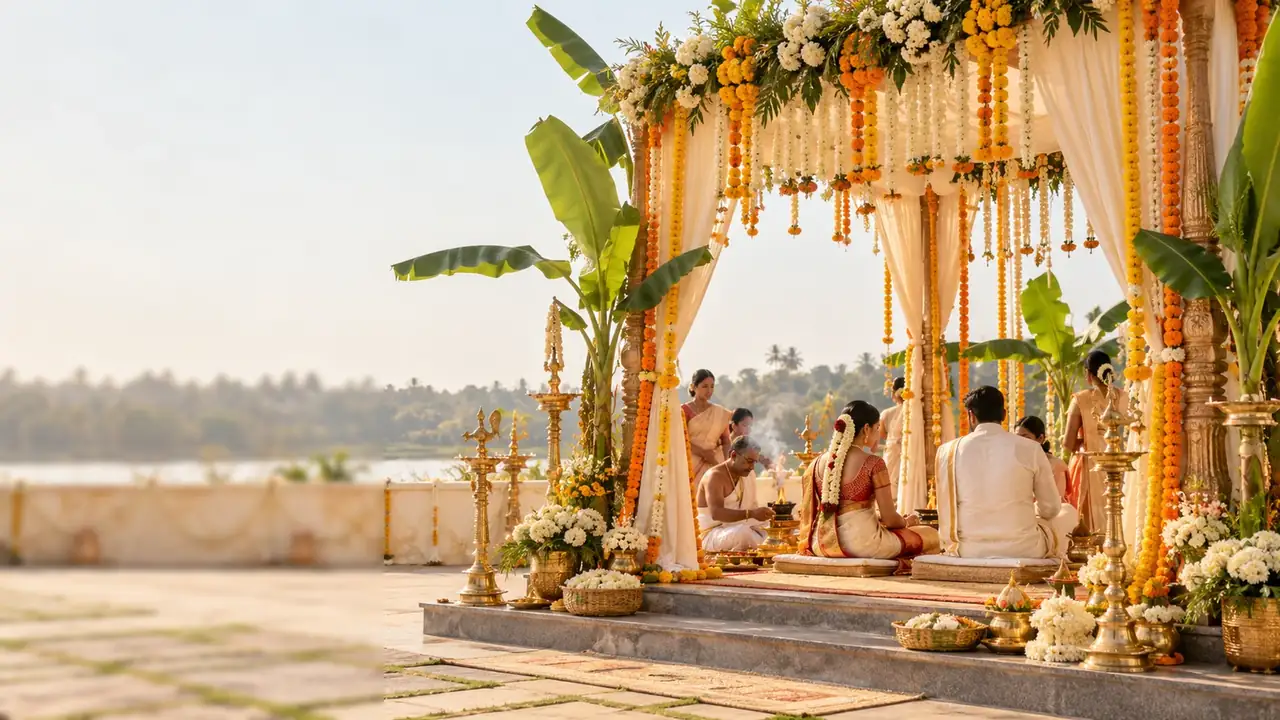
A traditional wedding is held together by ritual and family memory: the tilak, haldi, mandap, pheras or vows, vidaai and countless small customs that elders hold dear. Planning one well means listening first. GI.EVENTS helps you set out the ceremonies in order, coordinate the pandit, caterer, decorator and tent arrangements, and look after guests, whether the celebration is at home or at a hired venue, wherever in India your family gathers.
- Listing each ritual in sequence with timings, items needed and the family members involved
- Coordinating pandit requirements, puja samagri and mandap setup with the decorator
- Planning traditional menus, including satvik or regional dishes where families prefer them
- Arranging home-based functions alongside venue functions without overwhelming the household
- Supporting guest hospitality for relatives arriving from other towns and villages
What to share in your brief
- Community or family customs you would like followed
- Muhurat dates and timings, if already fixed
- Functions planned at home and at a venue
- Expected guest count for the main ceremony
Common questions
Our family follows specific customs. Will the plan respect them?
Yes. Every family's traditions are different, and the plan should follow yours rather than a standard format. Sharing the ritual sequence, any elder's guidance and items needed helps us coordinate respectfully. Where you are unsure, your family pandit's advice should lead.
Can traditional functions be held at home and the wedding at a venue?
Many families do this. Home functions like haldi or puja need space, catering and seating planned around the household, while the venue handles the larger ceremony. Coordinating both carefully helps avoid clashes in timing, transport and vendor schedules.